
High Quality Food Grade Fumed Silica Key Benefits for Food Processing Applications
2026-10-01
Powder clumping, bridging in hoppers, and moisture-ruined batches—these aren't just annoyances in food processing; they're profit leaks. High quality food grade fumed silica offers a practical fix, and its key benefits go far beyond simple flow improvement. This invisible workhorse keeps dry ingredients moving, stabilizes formulations, and meets the uncompromising purity demands of the food industry. But not all fumed silica is created equal. Suppliers like Zhonglian have earned trust for consistent, food-safe silica that processors can rely on. In the following sections, we'll break down exactly what makes this material so valuable in food processing applications—and why your current approach might be leaving money on the table.
The Anti-Caking Solution That Keeps Seasoning Blends Free-Flowing
You know the frustration: you reach for a jar of garlic powder or a custom spice rub, and instead of a light dusting, you get a solid clump that needs a chisel. That's where a smart anti-caking agent steps in, not to change the flavor, but to keep every granule loose and ready. Many blends rely on a simple trick borrowed from the baking aisle—rice concentrate or a touch of silicon dioxide. These tiny particles create a microscopic barrier between seasoning grains, so moisture can't pull them into a stubborn block.
What makes this solution work so well is balance. You want just enough agent to coat the surface of each particle, but not so much that it dulls the spice's intensity or leaves a chalky mouthfeel. The best formulations treat anti-caking as part of the blend's architecture, not an afterthought. A good test: shake the container after a few weeks. If the contents move like dry sand, the barrier is doing its job. If they shift as one heavy mass, someone cut a corner.
Beyond convenience, this free-flowing quality matters for consistency. A chef measuring a teaspoon of cayenne or a home cook sprinkling paprika over deviled eggs shouldn't have to fight the clump. The right anti-caking agent keeps the blend uniform from first use to last, so you get the same punch every time. It's a quiet detail that separates a seasoning you reach for from one you eventually toss in frustration.
How Food-Grade Fumed Silica Locks Out Moisture Before It Ruins Batches
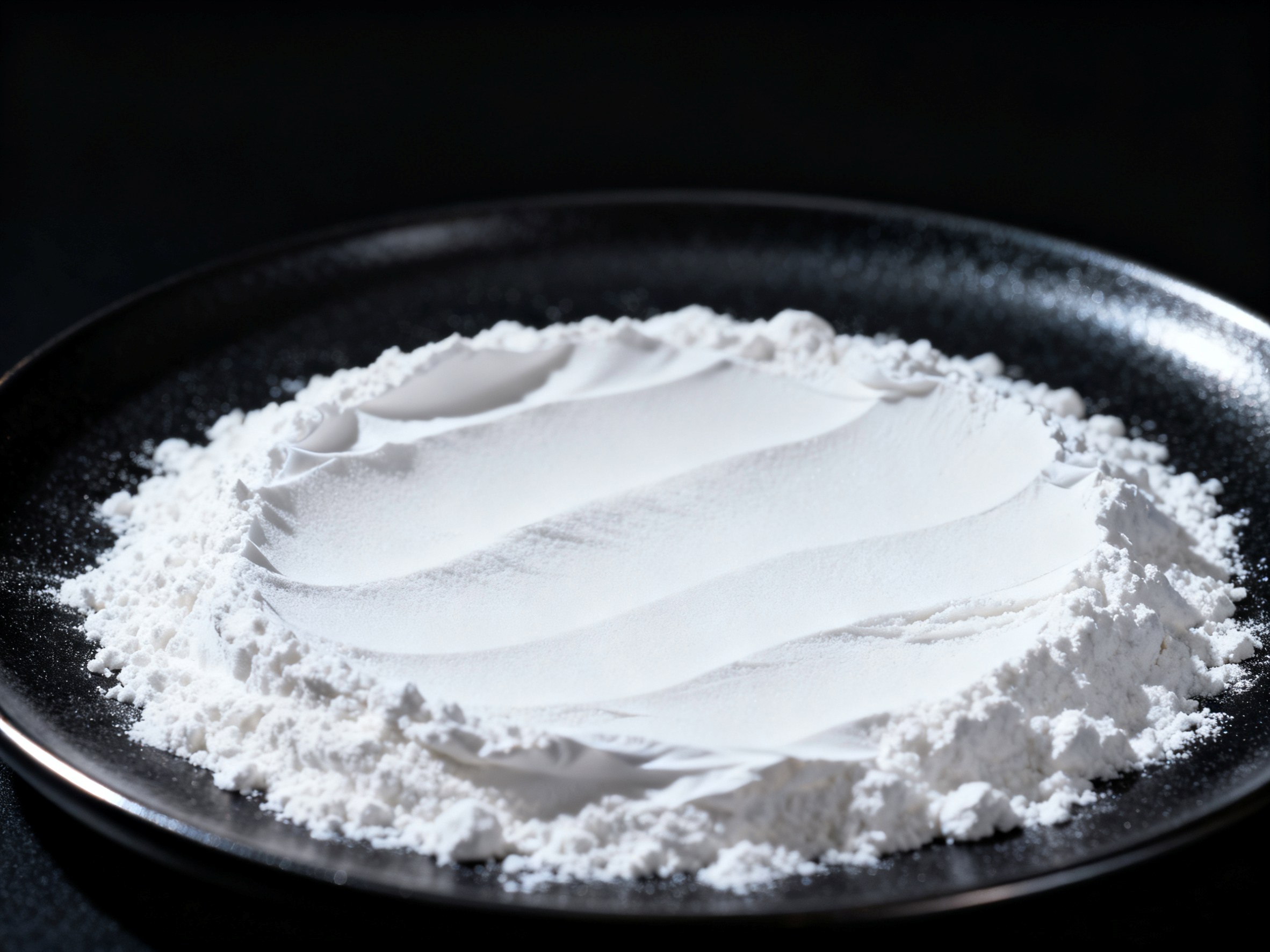
Humidity sneaks into powder batches long before visible clumps form. Food-grade fumed silica works as a physical spacer: its branched, nano-scale aggregates lodge between host particles and keep them from touching. Because the silica surface is treated to be hydrophobic, water vapor doesn’t condense into liquid bridges that glue particles together. Instead, moisture encounters a dry, high-energy surface that traps individual water molecules before they can dissolve sugars, salts, or proteins and trigger caking.
The real advantage is speed. Standard desiccants pull moisture from the headspace, but fumed silica sits directly in the powder matrix. It intercepts humidity at the exact point where two particles would begin to stick. This prevents the early-stage moisture uptake that leads to hard lumps, uneven flow, and off-texture reconstitution in drink mixes or seasoning blends. Even after the bag or hopper is opened repeatedly, the silica keeps working during mixing, conveying, and packaging.
In practice, adding a small dose during blending—typically fractions of a percent by weight—preserves pourability and uniform dosing. It’s not a cure for water-soaked product, but it stops the slow, invisible moisture ingress that ruins batches during storage. For dry blends with hygroscopic ingredients, this early barrier often means the difference between a clean discharge and a scrap bin.
From Liquid Flavor to Dry Powder: The Carrier Role Nobody Talks About
Here's the part nobody spells out: turning a liquid flavor into a dry powder isn't just about removing water. The real shift happens with the carrier. A liquid extract is volatile, often delicate, and nearly impossible to dose evenly in a dry mix. The moment you strip away the solvent, you need something to hold the flavor molecules in place—something that prevents them from evaporating, oxidizing, or clumping. That something is the carrier, and its role is far more active than the word 'filler' suggests.
Take citrus oils or vanilla extracts. Spray-drying them onto maltodextrin feels straightforward, but the choice of carrier changes everything. Maltodextrin gives a light, free-flowing powder that dissolves fast, yet it offers almost no protection against oxygen. Swap in gum arabic or modified starch, and you get a film-forming barrier that locks volatile top notes in place for months. The same flavor oil can taste bright and zesty in one powder and flat, cardboard-like in another—purely because of what it was riding on.
Then there's the end-use behavior. A dry powder carrier dictates how flavor releases in a beverage, how it distributes through a dough, or whether it survives a high-heat bake. In low-sugar drink mixes, a carrier with quick dissolution prevents floating specks. In baking, a carrier that melts at the right temperature ensures the flavor doesn't vanish before the crust sets. It's a silent negotiation between physical structure and sensory payoff, and it's the reason a well-made dry flavor can outperform its liquid ancestor in consistency—if you pick the right partner for the journey.
Stabilizing Emulsions and Suspensions Without Masking the Original Taste
Keeping an emulsion or suspension stable usually means adding thickeners or surfactants, but many of these come with a trade-off: they can dull aromatics, introduce off-notes, or leave a coating on the palate that masks the very flavors you're trying to showcase. The real challenge isn't just preventing phase separation—it's doing so while letting the original taste profile shine through untouched.
One practical approach is to use low-viscosity stabilizers like modified food starch or gum arabic at carefully calibrated levels. These create a fine network or interfacial film without building a heavy body, so the liquid still flows naturally and the flavor compounds release quickly. Another effective route is Pickering stabilization, where tiny solid particles (often from natural sources like cellulose or silica) sit at the oil-water interface. Because these particles don't dissolve or coat the tongue the way polymers do, the sensory impact remains minimal.
Processing also matters. High-pressure homogenization or ultrasonic treatment can reduce droplet or particle size to the submicron range, which often means you need far less stabilizer in the first place. In some formulations, flavor-active molecules themselves—like certain terpenes or esters—can act as mild interfacial agents, reinforcing stability without adding any foreign taste. The key is iterative sensory testing alongside rheology: if the mouthfeel and aroma match the unmodified base, you've found a balance that holds the structure without stealing the flavor.
Smoother Texture in Low-Fat Spreads, Dressings, and Protein Shakes
Low-fat spreads often turn watery or pasty when the fat is pulled out, but a carefully chosen blend of microcrystalline cellulose and xanthan gum can restore the rich mouthfeel without adding calories. These hydrocolloids form a weak gel that breaks down under shear, so the product spreads smoothly yet still coats the tongue the way a full-fat version would. The key is balancing the gel strength—too firm and it feels sticky, too soft and it drips off a knife.
In dressings and protein shakes, the problem is slightly different. Dressings need cling without sliminess, so starch esters and citrus fiber are often used to create a short, creamy texture that doesn't mask acidity. For protein shakes, soluble corn fiber or oat beta-glucan can bind to protein particles and reduce the chalky, dry finish that many low-fat formulas have. High-pressure homogenization before the gums fully hydrate makes a noticeable difference, giving the shake a uniform, almost dairy-like body.
Minimizing Production Downtime With a Predictable Flow Agent
A predictable flow agent pays for itself the first time a line keeps running instead of stalling. Rather than reacting to jams or uneven feed, the system reads material movement ahead of time and adjusts the pace before a blockage can form. Operators notice fewer alarm bells and less time spent clearing the same spot twice.
The shift in approach is subtle but practical. Instead of chasing maximum speed, the agent maintains a steady rhythm that matches upstream and downstream capacity. When one station slows for a tool change or a short pause, the flow adjusts without forcing the whole line to wait. Over a week, those small avoidances add up to noticeably more productive hours.
FAQ
Food grade fumed silica is an ultra-fine, synthetic amorphous silicon dioxide produced by flame hydrolysis. Unlike crystalline silica or naturally occurring silica sand, it has an extremely high surface area and purity that meets strict food additive standards. This means it's been tested and certified safe for ingestion, with heavy metal levels kept very low. Regular silica may contain impurities or have a crystalline structure that isn't suitable for food use.
The main reason is to prevent caking and clumping. Many powdered foods like spices, coffee creamers, protein powders, and dried seasonings tend to absorb moisture from the air, which makes particles stick together. Fumed silica coats the surface of these particles and acts like a microscopic spacer, keeping them separate and free-flowing even in humid conditions. This ensures consistent dosing and helps the product pour smoothly from the package.
Yes, it can. In liquid systems, fumed silica is often used as a thickening or suspending agent. Because of its huge surface area and ability to form a three-dimensional network, it can increase viscosity and keep solid particles (like fruit pieces in beverages or spices in salad dressings) evenly dispersed. This prevents settling and gives the product a more stable, appealing texture without adding calories or changing the flavor.
Generally, yes. Fumed silica is chemically inert and doesn't contain gluten, dairy, nuts, soy, or other common allergens. It's also vegan and doesn't come from animal sources. However, as with any food additive, it's listed on ingredient labels as E551 in Europe or simply as silicon dioxide in many other regions, so consumers with specific sensitivities can identify it. Regulatory bodies like the FDA and EFSA have approved its use within certain limits.
In powdered drink mixes and protein shakes, fumed silica serves two key functions: it keeps the powder from clumping during storage and helps it disperse more easily when mixed with liquid. By preventing moisture uptake and keeping particles separate, it reduces the notorious 'dusting' and 'clumping' problems. When you scoop the powder into a shaker, it tends to wet out faster and mix more evenly, resulting in a smoother drink with fewer dry lumps.
Look for a supplier that provides detailed certificates of analysis showing compliance with food-grade regulations, including low levels of lead, arsenic, and other heavy metals. The product should have consistent particle size distribution and surface area, because that affects performance. Also check if the supplier has quality certifications like ISO 22000 or FSSC 22000 for food safety management. Finally, request samples to test in your specific formulation—what works for one product may not work for another due to differences in moisture, fat content, and processing conditions.
One misconception is that it's the same as the silica gel packets found in shoe boxes or electronics—those are a different form and should never be eaten. Another is that because it's 'synthetic,' it's automatically harmful. In reality, fumed silica is made from the same silicon and oxygen elements found in nature, just processed into a purer, more controlled form. It passes through the digestive system largely unchanged and is not absorbed into the bloodstream in significant amounts.
Conclusion
In seasoning plants, moisture is the quiet enemy that turns a free-flowing spice blend into a clumped, unusable mass. High quality food grade fumed silica addresses this by coating individual particles and creating a microscopic barrier that keeps hygroscopic ingredients like garlic powder, onion powder, and salt blends from absorbing ambient humidity. This anti-caking action doesn't just preserve scoopability; it protects entire production batches from being rejected due to lumps or inconsistent dosing. Beyond dry blends, the same silica acts as a reliable carrier that transforms liquid flavor extracts, essential oils, or vitamin premixes into easy-to-handle dry powders. A small addition converts sticky, volatile liquids into stable, free-flowing solids that can be precisely metered into seasoning lines, soup bases, or powdered beverage mixes without clogging equipment or leaving oily residues.
The functional benefits extend into emulsions and texture systems where manufacturers often struggle to balance stability with clean flavor release. Fumed silica reinforces the network around oil droplets in dressings, sauces, and low-fat spreads, preventing phase separation during storage without contributing any off-taste or masking the intended flavor profile. In protein shakes and reduced-fat formulations, it builds a smooth, creamy mouthfeel that would otherwise require additional fats or starches. On the production floor, this translates into fewer line stoppages. Because the silica's particle size and surface chemistry are tightly controlled from batch to batch, flow rates remain predictable, hopper bridging disappears, and operators spend less time clearing clogs or recalibrating feeders. That consistency is what keeps high-volume food processing running with fewer interruptions and more reliable output.
Contact Us
Contact Person: Levin Wang
Email: [email protected]
Tel/WhatsApp: 8618668999988
Website: https://www.silicaplant.com/